Dial-a-Tree Virtual Tree Nursery
Tree Stuff Blog
Avoiding Problems Growing Lusitanicas - by Ben Gaia, www.dialatree.co.nz
www.dialatree.co.nz
Lusitanicas are back on the tree planting menu. A full generation of us has seen them go from seedling to mill, and we have seen the great wood and results these versatile trees give. Many of us know someone who has grown lusitanicas to full size, and milled great timber from them. While fussier than Pinus radiata, they are fast growing trees, and give a superior timber to pine in a similar timeframe. But there are several pitfalls that can reduce the output of a cypress stand, or even wipe it out, wasting time and space, and giving the species a bad name. There are a few pitfalls to be avoided right from the start. Following these suggestions will guarantee you an improved return from your young trees in the years to come.
Fencing from Animals
For a large scale forest out in the wilds, fencing from deer and pigs is not always practical, and you have to take some losses, and overstock the trees accordingly. But in a Farm Forestry situation or small rural block, if farm grade fencing can be achieved, so much the better. Young trees (more so than pines) and older trees too, will suffer from animals like cattle and horses pushing and rubbing on them. They will eat and rub off the bark, toppling them and even eating whole trees when small. Older cypresses will handle a few weeks of sheep in summer when established, to graze and manure, under daily supervision, but the woodland should always be cattle free. When tiny you may need to tree guard each young tree from rabbits and even pukekoes who object to trees and pull them out. Don't have goats. Without fencing, your own wandering herds, or a neighbours, can wipe out your entire stand of trees even up to ten or more years after planting, wasting years of work.
See the Forestry Section in my book, Growing Organic Trees link to book
Firm Ground and Wind Shelter
Soggy ground is no good for Lusitanicas and they will rock in the wind and drown in their flooded roots. High winds will burn off the foliage especially in harsh dry summer norwesters, and coastal areas, so all-round shelter is advised. You can leave unpruned trees right around the outside as a protective barrier, or plant other trees among the lusis, like alders, larch, or other conifers to provide shelter through the forest. Lack of wind shelter can lead to butt sweep and curved butt logs which lowers the milling return. Wind can cause the growth of more branches in this quite branchy species, which then need more pruning, hence more work.
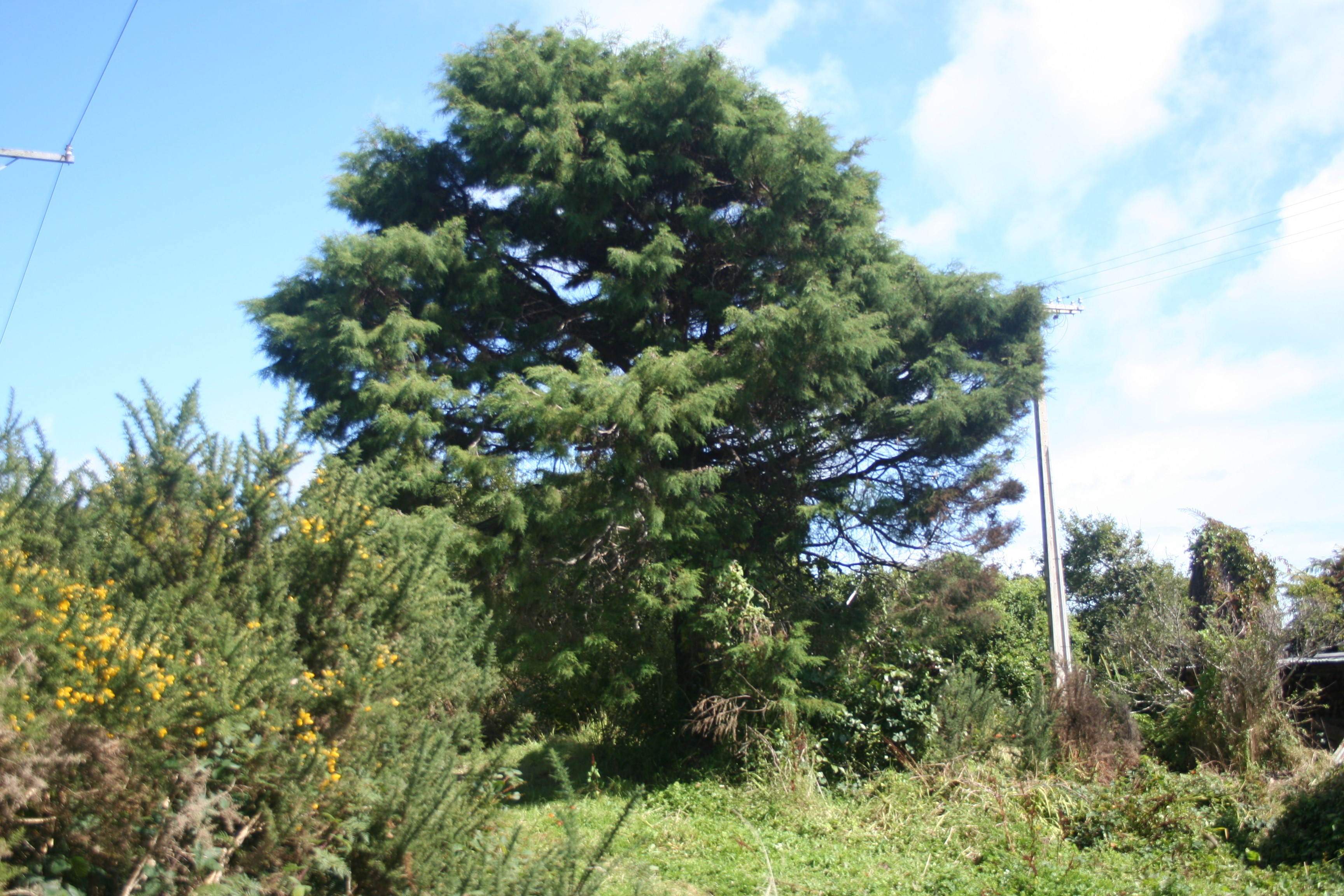
A bushy tree in the open with coastal winds
Too Fast For its Companions
This is a long term consideration. Many of us tried planting mixed timber stands in the nineties in the name of diversity and resilience, and some combinations are good. But growing very fast trees with other slow ones like long term oaks or hardwoods can be a mistake. When it comes to harvesting all your big trees are going to fall on the smaller ones underneath, potentially ruining your other later tree crops. For this reason I can recommend growing lusitanicas in coups or stands of one species. Some soil, winter light, and shelter benefits can be had though, by interplanting fast growing deciduous trees like Red Alder and Larch. These will keep up with their fast growing cypress mates; and can be co-harvested, or will at least survive the others being felled around them, for later tree crops. Spacing is also important as if you plant too close, your lusis will outgrow each other and end up too tall and thin. And if you plant too wide they will go branchy and round to fill the light wells.
A good spacing is 500 to 600 per hectare but often you need to plant twice this and thin out all the duds at about year five or six, to end up with enough trees.
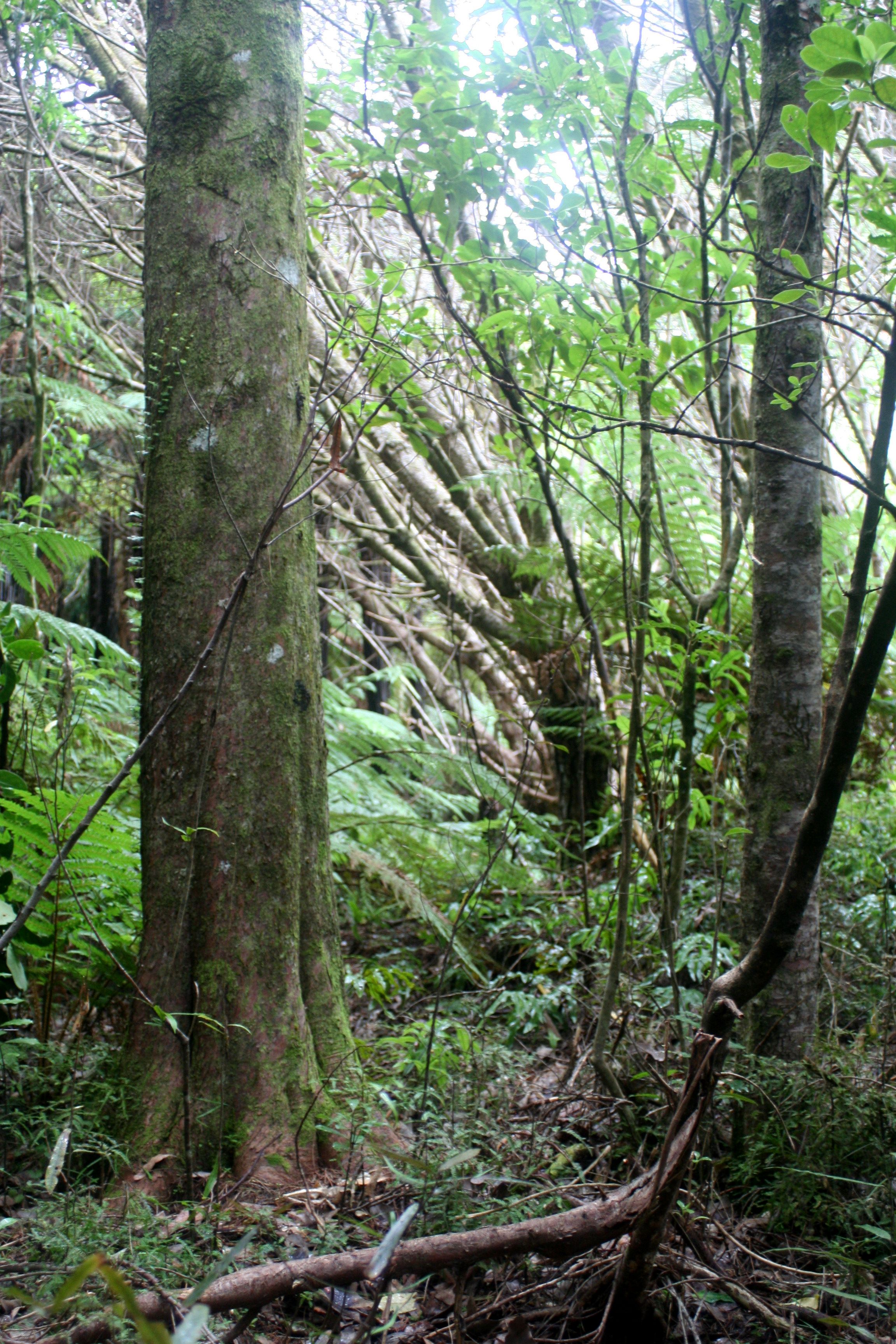
Mixed lusitanica stand with Pinus pinea, native regen, Lawsons and Eucalyptus botryoides.
Over pruning
Good forestry doesn't happen without some thinning and pruning. But a common problem with amateur foresters (including with pine plantations) is to prune the trees too high at a time, losing too much of the tree's green crown or solar panels, thereby slowing its growth, and sometimes, causing it to give up and perish. Pruning the right amount can accelerate the straight vertical trunk growth, BUT if you remove more than half the tree's top at one time you will knock it back too much and slow its growth. For the sake of feeling satisfied with all your clean, parallel bare trunks, little green flags on a stick rarely survive. Lusis like three separate two-metre lifts to a six metre log, just like radiata, over a period of years between about year six and ten. Any later than this is really too late as the size of the branches to be removed will become impossible work. Which brings us to the next pitfall:
Under pruning
Yes! Lusitanicas grow so fast and furious that things can quickly get away on you. Where's that bicycle you leaned up against the tree? Half swallowed by a huge branch. If you leave a pruning job two years too long it may be too late. These are "branchy" trees, more so than radiata, and the pruning lifts to gain clearwood straight single trunks are vital. Leaving them too long you will get enormous side branches and double trunks which need a large chainsaw cut to remove. This leaves a pruning scar too big to heal quickly and which may lead to canker and tree collapse.
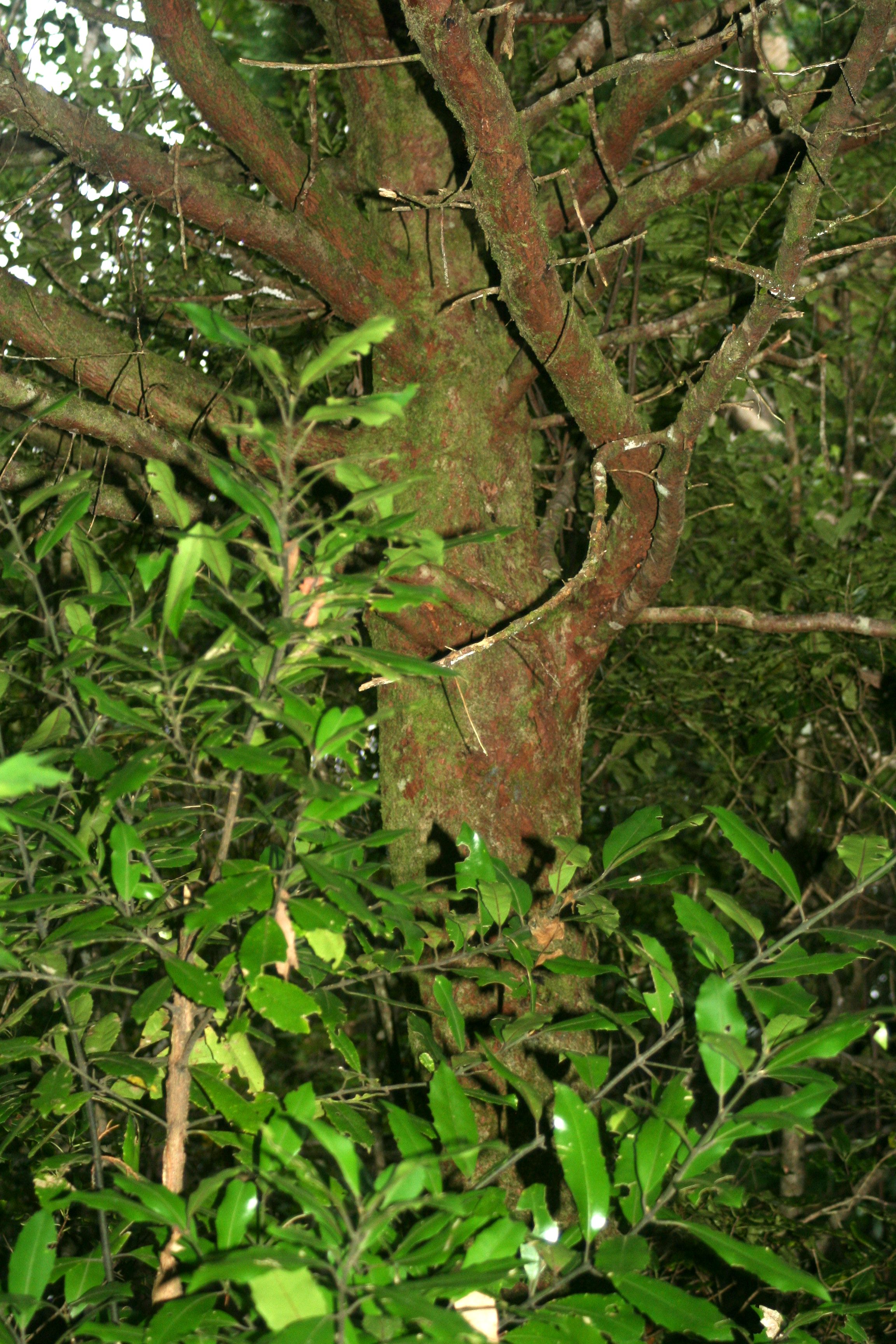
Big twisty branches left far too long to be pruned
Also as described earlier, if you then have to remove too much of these huge branches at once, the tree can be shocked into an early death. Unpruned lusi stands make great firewood... but we are looking to grow good six metre milling logs as an investment. So take out your double leaders and side branches when they are small, say up to 100mm diameter and preferably half that size. Timing of pruning is important for these trees and can leave you with a really good stand, or just a firewood lot.
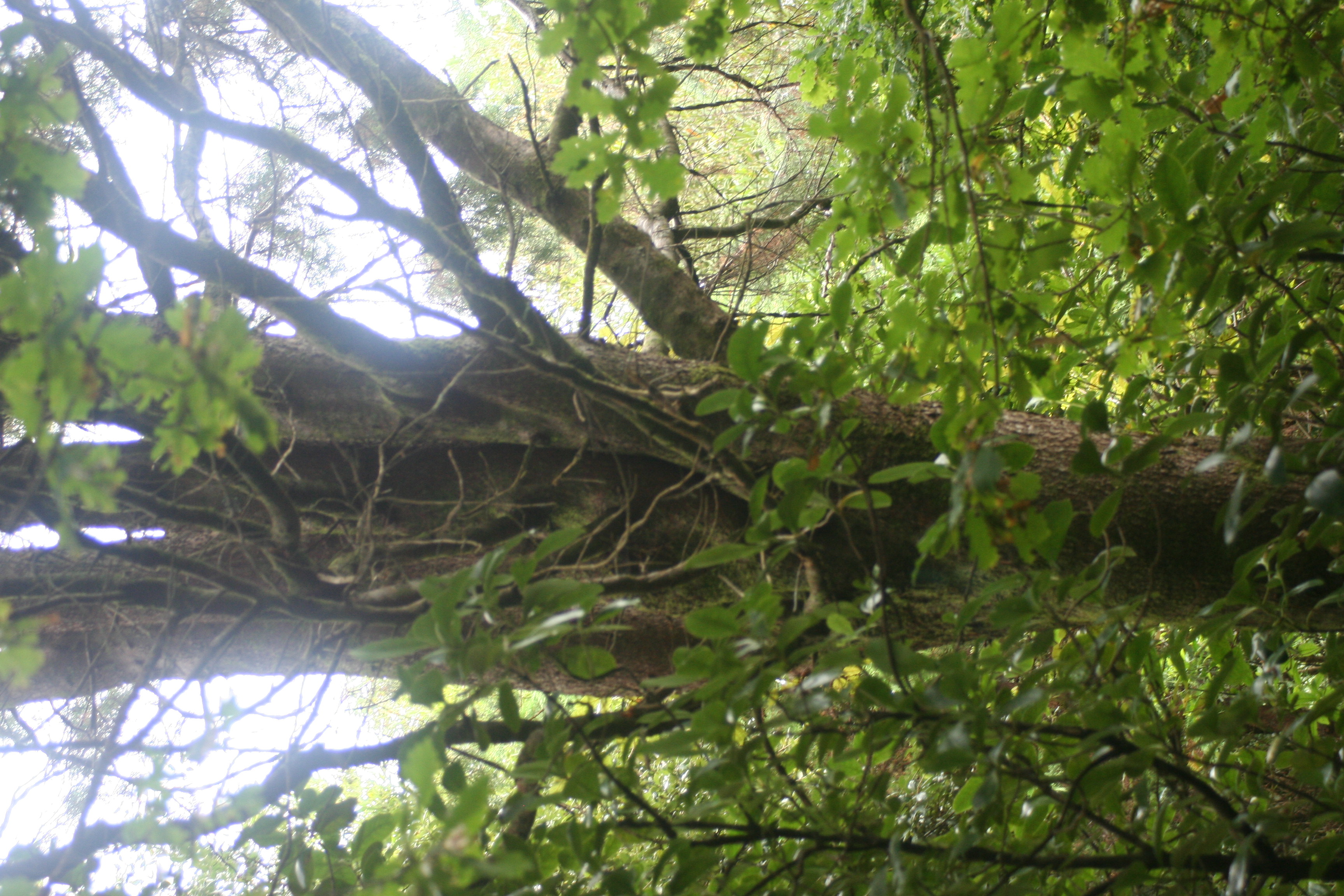
What happens to unpruned multi leaders after twenty years
So luckily now we can learn from the failures and successes of a full cycle of cypress growing from those of us who did it in the 90s. Hopefully our attempts at growing good clearwood will improve if these lessons are applied in future. Although as we have seen, Lusitanicas are a bit fussy and whole stands can just disappear (cattle, gales, goats). Protected and tended they are generally as reliable as macrocarpas, except by the sea, and have a wider range in colder areas with frost and snow. So get planting: but keep up with the work. You will be paid handsomely in coffee tables and still be young enough to make them.

The End Product
We grow fruit and timber trees in the extreme climate of the South Island. Explore our mail order nursery for organic fruit and forestry trees.
Back to dialatree - and tree blog archive - www.dialatree.co.nz